

At Akron Dream Center, we want the fastest path to food and practical help to be easy to find. Call 2-1-1 for United Way’s referral line, which is answered around the clock and can point you to whatever is open right now. Or search the Akron-Canton Regional Foodbank’s Find a Program tool by your zip code, which lists food programs open now or opening soon across eight counties.
Nobody at these places will ask you to prove you deserve help. Bring photo ID if you have it. You may be asked to sign a short form stating your household size and that your income qualifies, and that’s usually the extent of it.
Start here
| Need | Where to go |
|---|---|
| Food today, anywhere in Summit County | Call 2-1-1, any hour |
| A pantry near your address | Akron-Canton Regional Foodbank, Find a Program, by zip code |
| A hot meal at midday | Salvation Army Community Table sites, weekdays |
| Groceries once a month | Salvation Army Akron pantry, 1033 Bellows St |
| A drive-thru distribution | Red Shield Food Distribution, second Wednesday monthly |
| Help for a student | University of Akron distribution, fourth Thursday monthly |
The Akron-Canton Regional Foodbank
The foodbank at 350 Opportunity Parkway is the source most Akron pantries draw from rather than a walk-in pantry itself, though it operates distributions on site. It supplies food to roughly 600 hunger relief programs across eight Northeast Ohio counties, and it distributed around 40 million pounds of food in the past year.
Find a Program. The tool on the foodbank’s website takes your zip code and how far you’re willing to travel, then lists programs open now or opening soon. Some pantries let you book an appointment online, which saves standing in a queue. Call ahead where you can, because hours shift.
On-site distribution. The Venarge Family Food Pantry operates at the Opportunity Parkway address on Mondays, Wednesdays and Fridays from 9am to 1pm. [VERIFY]
Phone. (330) 535-6900.
What’s changed. Demand across the foodbank’s eight-county service area is higher than at any point since 2019. State and federal funding cuts removed support for somewhere between five and six million pounds of food, though private donors have covered much of the gap. The organisation has been buying more fresh produce and protein rather than only shelf-stable items.
The Salvation Army in Summit County
The Salvation Army runs the widest set of food programs in the city, and most of them need no appointment.
Akron food pantry. 1033 Bellows Street, Akron, OH 44311. Open Monday through Thursday. Households can visit once a month and receive groceries sized to the number of people in the home, including meat, dairy, fresh vegetables and shelf-stable items where available.
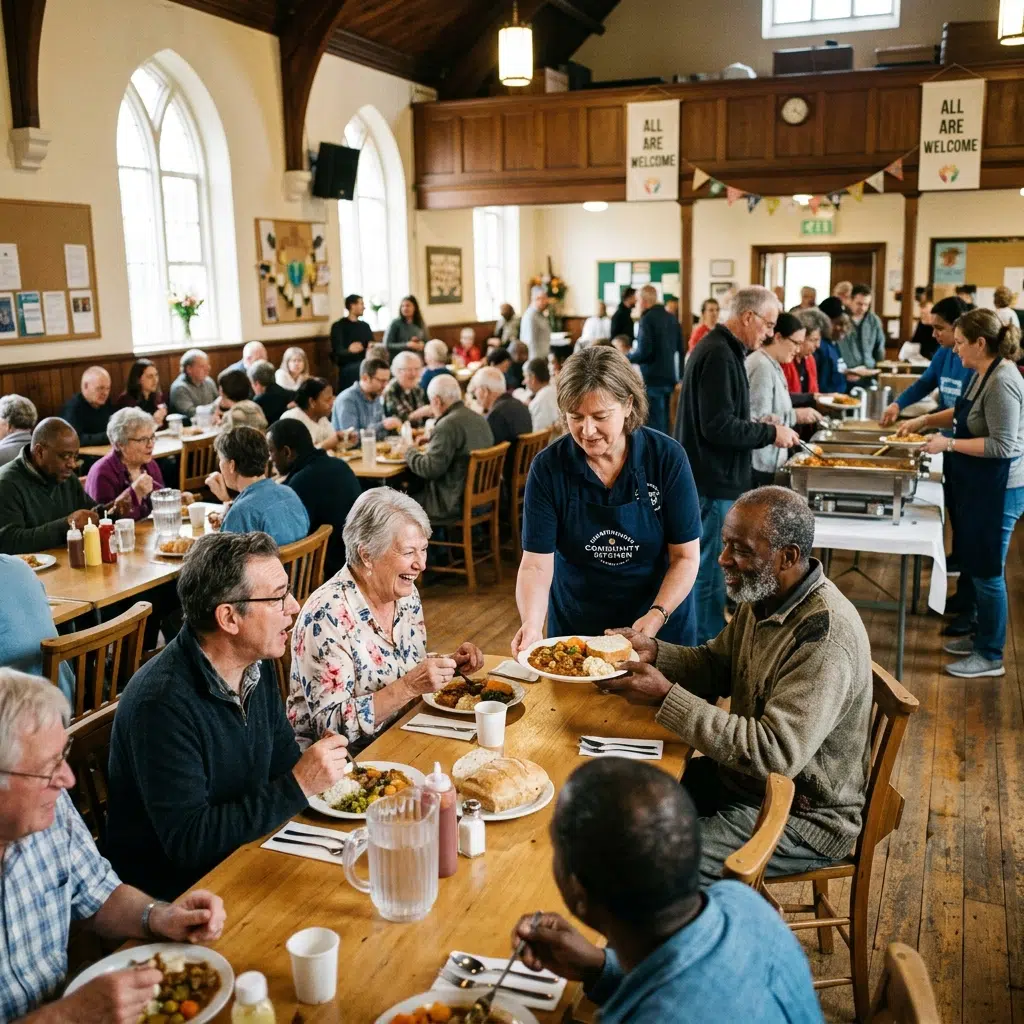
Community Table hot lunches. Free hot meals, weekday afternoons, at several sites across the city:
| Site | Time |
|---|---|
| Maple Street | 11:00am to 12:00pm |
| Barberton Salvation Army | 11:30am to 12:30pm |
| Kenmore Community Center | 11:30am to 12:30pm |
| Summit Lake Community Center | 11:30am to 12:30pm |
| Patterson Park Community Center | 11:00am to 12:00pm |
No appointment, no paperwork. Show up and eat.
Red Shield Food Distribution. A monthly drive-thru, open to anyone in need, held on the second Wednesday of each month except December. [VERIFY exact times and location.]
University of Akron distribution. Fourth Thursday of the month, except November and December, from 11am to 1pm at 315 Buchtel Commons, near the Honors dorms and Bierce Library. This is a walk-up distribution and it’s open to university students and community members alike.
Good Samaritan Hunger Center
A mobile pantry rather than a fixed site. Good Samaritan distributes food and produce across five locations around Greater Akron during the last three weeks of every month. The organisation has operated as a nonprofit since 1982 and has increased its service levels to meet rising need.
Because the locations rotate, check their current schedule before travelling. [VERIFY current sites and days.]
Church and neighbourhood pantries
Dozens of congregations across Akron run pantries, most on a monthly cycle, most with narrow windows.
A few patterns worth knowing rather than a list that will be out of date by the time you read it:
Most church pantries run once a month, often on a fixed weekday of a fixed week, like the last Wednesday evening or the third Saturday at noon. Once you find one that fits your schedule, put it in your calendar as a repeating event.
Queues start early. At pantries with a monthly distribution, people line up well before opening. One long-running Akron church pantry that opens at noon sees the queue start around 9:30am. If you can arrive early, do.
Evening and weekend options exist but are fewer. If you work weekdays, the Saturday distributions and the Wednesday evening slots are what you’re looking for, and they fill fastest.
North Hill Community House runs a monthly pantry serving the North Hill neighbourhood. [VERIFY current schedule.]
The Akron-Canton Regional Foodbank’s Find a Program page lists most of these with current hours, which is why it’s the first place to check rather than a static list on any website, including this one.
City of Akron programs
The City of Akron partners with the Salvation Army and Good Samaritan Hunger Center to run food distribution through its Recreation and Parks department. There’s no charge and no eligibility screening. Distributions happen at community centres around the city, and the current schedule sits on the city’s website under Recreation and Parks.
What to bring and what to expect
Photo ID. Most distributions ask for it. If you don’t have one, go anyway and explain. Programs are generally not in the business of turning people away over paperwork. If your situation is part of a bigger problem, our guide to community assistance in Akron explains rent, utility, SNAP and housing help in one place.
Bags or boxes. Some sites provide them, some don’t. Bring reusable bags and a cart if you have one, because a month of groceries is heavier than it sounds and many people are walking or taking the bus.
A signed form. You may be asked to sign a short statement, usually electronic, confirming your household size and that your income makes you eligible. You won’t have to produce pay stubs or prove how many children you have.
Someone else’s pickup. If you can’t get there yourself, most programs accept a proxy. The person collecting on your behalf needs a signed letter of proxy, which the foodbank provides as a form. Fill it in, sign it, and send it with them.
A wait. Plan for one, especially at monthly distributions and at the start of the month.
Your first visit, step by step
The hardest part for most people is walking in the first time. Here’s how it actually goes.
Before you leave. Call ahead if the number’s listed. Confirm the pantry is open, confirm you’re inside their service area, and ask what to bring. A two-minute call saves a wasted bus trip.
When you arrive. Look for the queue or the check-in table. At smaller church pantries someone will greet you and ask your name and address. At larger distributions there’s a sign-in sheet or a tablet.
The form. Household size, address, and a box confirming your income falls under the threshold. You sign it. Nobody reads it back to you or asks follow-up questions.
Choosing food. Two models. Some pantries pre-pack boxes by household size and hand you one. Others run client choice, where you walk through with a cart and pick items within limits, which works more like a small shop. Client choice pantries waste less food because people take what they’ll eat.
What you’ll get. Shelf-stable staples, usually some fresh produce, often dairy and frozen meat depending on what came in that week. A month’s supply for one household is heavier than most people expect.
Leaving. That’s it. You don’t owe anyone an explanation and you won’t be asked for one.
Volunteers at these places have seen every circumstance. Job loss, medical bills, a car that died, hours cut, a benefit that stopped. Nobody is keeping score.
Getting there without a car
A pantry you can’t reach helps nobody, and this is the practical barrier that stops people using programs they qualify for.
METRO RTA runs Akron’s bus network. Most major pantry locations sit on or near a route, and the trip planner on their site will route you door to door. Fares are low and reduced fares exist for seniors and people with disabilities.
Plan the return trip with the bags. A month of groceries is 30 to 50 pounds. Bring a folding cart or a rolling suitcase if you have one. Two people is easier than one.
Mobile distributions. Good Samaritan Hunger Center’s model exists precisely because transport is the barrier. Rotating sites across Greater Akron mean the food comes closer to where people live. Check their current locations rather than travelling across the city.
If you’re homebound. Ask about delivery. Some programs arrange it for people with mobility limits, and the proxy pickup option covers the rest. Calling 2-1-1 and explaining the situation is the fastest way to find out what exists near you.
Making the food last
Pantry food arrives in whatever quantities the supply chain produced that week, which means feast and famine on specific items.
Freeze aggressively. Bread, meat, milk and most produce freeze. If you get four loaves, freeze three the day you get them.
Learn two or three recipes that absorb anything. Soup, rice bowls and pasta bakes take whatever vegetables and protein you have. A pantry haul rarely matches a recipe, so cook the other way round.
Check dates rather than assuming. Best before is a quality date, not a safety date, and pantries distribute past it deliberately for shelf-stable goods. Use by on meat and dairy is the one to respect.
Ask what’s coming. Volunteers often know what’s arriving next week. If produce lands on Thursdays, going Thursday gets you fresh food rather than what’s left.
Take the things you don’t recognise. Foodbanks receive donations across a wide range and some items sit because nobody knows what to do with them. A quick search on your phone at the shelf beats leaving food behind.
SNAP: what changed and what to do
SNAP rules tightened over the past year and the effects are still working through households in Summit County.
Work requirements. Adults subject to the rule who don’t report 20 hours of work per week, or complete the paperwork to be exempted, become limited to three months of benefits in any three-year period. The paperwork is the part that catches people, since exemptions exist for disability, caring responsibilities and other circumstances but require documentation.
Immigrant eligibility. Federal changes removed food benefits for certain categories of legally present non-citizens, including some refugees and green card holders who have been in the country under five years.
Broader reductions. The federal reconciliation package passed in 2025 cut SNAP spending substantially over a ten-year window, with some provisions taking effect later in the decade.
What to do about it. If your benefits were cut or ended, contact Summit County Job and Family Services to check whether an exemption applies to you. Appeal deadlines are short. In the meantime, the pantries above don’t ask about SNAP status.
If you’re not sure whether you qualify for SNAP at all, apply. The Ohio Benefits portal handles applications online, and county caseworkers process them. People routinely assume they earn too much and turn out to be eligible.
By neighbourhood
Akron spreads out, and the pantry that’s technically closest may not be the one that serves your zip code. A rough orientation, and the foodbank’s Find a Program tool will confirm the current picture for your address.
Downtown and University area. The Salvation Army at 1033 Bellows Street sits south of downtown and covers a wide catchment. The University of Akron distribution at 315 Buchtel Commons runs monthly and is open to community members, not only students, which many neighbours don’t realise.
North Hill. North Hill Community House runs a monthly pantry. The neighbourhood has one of the city’s largest immigrant and refugee populations, and food programs here stock a wider range of staples as a result. [VERIFY current schedule.]
Kenmore. Kenmore Community Center hosts a weekday Community Table hot lunch from 11:30am to 12:30pm.
Summit Lake. Summit Lake Community Center, same programme, same times.
East Akron and Patterson Park. Patterson Park Community Center serves hot lunch from 11:00am to 12:00pm on weekdays.
Barberton. The Salvation Army in Barberton runs its own Community Table from 11:30am to 12:30pm, serving households across the western end of the county.
Wider Summit County. Congregations in Hudson, Cuyahoga Falls, Stow and Wadsworth run pantries and send volunteers into Akron programs. If you live outside the city, search by your own zip code rather than travelling in.
When demand spikes
Certain times of year strain every pantry in the county, and knowing the pattern helps you plan.
The last week of the month. SNAP benefits run out and pantry queues lengthen. Going in the first half of the month means shorter waits and fuller shelves.
School holidays. Families who rely on school meals lose them over summer and at winter break. Summer feeding programs partly cover the gap, and pantry demand still rises.
November and December. Donations peak and so does need. Some pantries suspend their regular monthly distribution in December in favour of holiday programs, which is why several schedules above carry a December exception. Check before you travel that month.
January and February. Donations fall off a cliff after the holidays while heating bills arrive. This is the hardest stretch of the year for pantries and the best time to donate if you’re on the giving side.
After a benefit change. The SNAP work requirement and the changes to non-citizen eligibility both produced measurable jumps in local demand. Expect queues to grow whenever a federal or state rule shifts.
If you’re in crisis right now
Food is one piece. If the reason you can’t afford groceries is that something larger has gone wrong, these are the numbers that matter in Summit County.
2-1-1. United Way’s referral line, any hour, for food, shelter, utilities, rent and almost anything else. This is the single most useful number in the county.
Summit County Job and Family Services. SNAP, cash assistance, Medicaid and childcare support.
Ohio Benefits. The online portal for SNAP and Medicaid applications.
Emergency shelter. Call 2-1-1 and ask for the current shelter intake process, which changes seasonally and by household composition.
988. The Suicide and Crisis Lifeline, by call or text, if the weight of this is getting to be too much. Financial crisis and mental health crisis travel together more often than anyone admits, and reaching out for one doesn’t mean you can’t ask about the other.
Other food resources
School meals. Akron Public Schools provides meals during the school year. Summer feeding programs run at sites across the city when school is out. [VERIFY current provider and locations.]
WIC. Nutrition support for pregnant people, new parents and children under five, run through Summit County Public Health. Separate from SNAP, with different income limits, and worth applying for even if SNAP was denied.
Senior programs. Home-delivered meals and congregate dining for older adults run through Direction Home Akron Canton Area Agency on Aging. [VERIFY.]
Pet food. Several Akron pantries distribute pet food alongside groceries. If keeping a pet fed is the reason your own food budget is stretched, ask. This is more common than people expect and nobody will judge you for it.
If you want to help
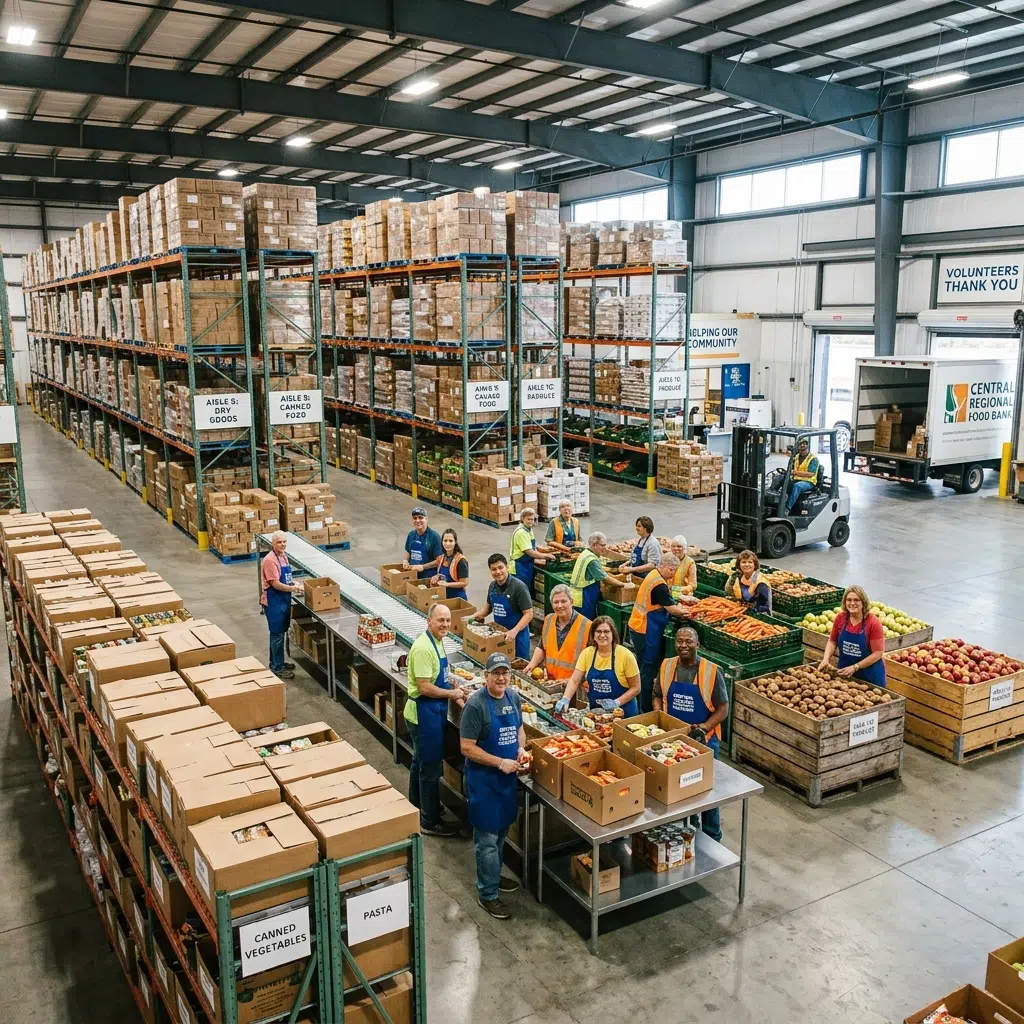
Volunteer. Pantries need people to sort, pack and distribute, and the shifts are usually a few hours. The Akron-Canton Regional Foodbank runs volunteer sessions at its Opportunity Parkway warehouse. Individual pantries take help directly.
Donate money rather than cans. A foodbank buys wholesale and turns a dollar into far more food than you can buy at retail. Food drives have a place, mostly for community engagement, but cash does more.
Donate what’s actually short. Protein, fresh produce and culturally appropriate staples run shortest. Rice, beans, cooking oil, spices and halal or kosher items get requested more than they get donated.
Give time at the same place repeatedly. Programs run on relationships and a volunteer who shows up monthly for a year is worth more than twenty one-off helpers.
The Akron Dream Center
We run relief work in Akron alongside the organisations above, focused on immediate practical needs in our community and on the longer work of helping people build toward something better. If you need help, or want to serve, you’ll find our contact details at the bottom of this page.
FAQ
Where can I get free food in Akron, Ohio today?
Call 2-1-1 for United Way’s referral line, answered around the clock, and they’ll direct you to whatever is open now. The Salvation Army serves free hot lunches on weekdays at Maple Street, Kenmore, Summit Lake and Patterson Park community centres and at the Barberton Salvation Army, with no appointment needed. The Akron-Canton Regional Foodbank’s Find a Program tool lists pantries open now by zip code.
Do I need to prove I’m eligible for a food pantry?
Generally no. Most programs ask for photo ID and a signed statement confirming your household size and that your income qualifies. You won’t be asked for pay stubs, tax returns or proof of your children’s existence. Some pantries have service area boundaries by zip code, so check that you’re in the right one before travelling.
How often can I visit a food pantry in Akron?
Most pantries operate on a monthly cycle, so once per household per month at any given site. You can use different pantries in the same month, and many people do. Hot meal programs like the Salvation Army’s Community Table run daily on weekdays with no limit.
What is the Akron-Canton Regional Foodbank?
A regional distribution organisation at 350 Opportunity Parkway in Akron that supplies food to around 600 pantries, shelters and hot meal sites across eight Northeast Ohio counties. It isn’t primarily a walk-in pantry, though it runs distributions on site. Its Find a Program tool is the best single place to search for food help by zip code. Phone (330) 535-6900.
Can someone else pick up food for me?
Yes. Most programs accept a proxy pickup. The person collecting needs a signed letter of proxy from you, which the foodbank supplies as a downloadable form. Bring it to the distribution along with their own ID.
I lost my SNAP benefits. What now?
Contact Summit County Job and Family Services to find out why and whether an exemption applies, and note that appeal windows are short. The most common cause is the work requirement, which limits benefits to three months in three years for adults who don’t report 20 hours of work weekly or file exemption paperwork. Food pantries don’t ask about SNAP status, so use them while you sort it out.
Are there food pantries in Akron open on weekends?
Some, though fewer than on weekdays. Several church pantries run Saturday distributions, typically on a fixed Saturday of each month, and these fill fastest because they’re the only option for people working weekday hours. Search the foodbank’s Find a Program tool and filter by day, or call 2-1-1 and say specifically that you need a weekend option.
Can college students use food pantries in Akron?
Yes. The University of Akron distribution at 315 Buchtel Commons runs on the fourth Thursday of most months from 11am to 1pm and is open to students and community members alike. Students are also eligible at general community pantries, and many campuses run their own smaller pantries with fewer restrictions than people assume.
What if I need help with more than food?
Call 2-1-1. Food is usually the visible edge of a larger problem, and the referral line handles rent, utilities, medical costs, transport and shelter alongside food. Several Akron organisations, including this one, work across those needs rather than only distributing groceries, so ask rather than assuming food is all that’s available.
Is there help with baby formula and diapers?
SNAP doesn’t cover diapers or wipes, which puts real pressure on households with infants. WIC provides formula and specific foods for pregnant people, new parents and children under five, through Summit County Public Health, with different income limits from SNAP. For diapers, local diaper banks and church programmes fill the gap. Ask 2-1-1 for what’s currently operating near you.
Do food pantries in Akron ask about immigration status?
No. Food pantries and hot meal programmes serve anyone who comes, and they don’t check status or report anyone. This matters because federal changes removed food benefits for some categories of legally present non-citizens, including certain refugees and green card holders in the country under five years. If your benefits ended, the local emergency food network remains open to you.